Every school has its Open Day. It’s the day where everything is on display. The science labs, the computer labs, the sports fields, even the trophy cabinets are ensured that they are ready for the day.
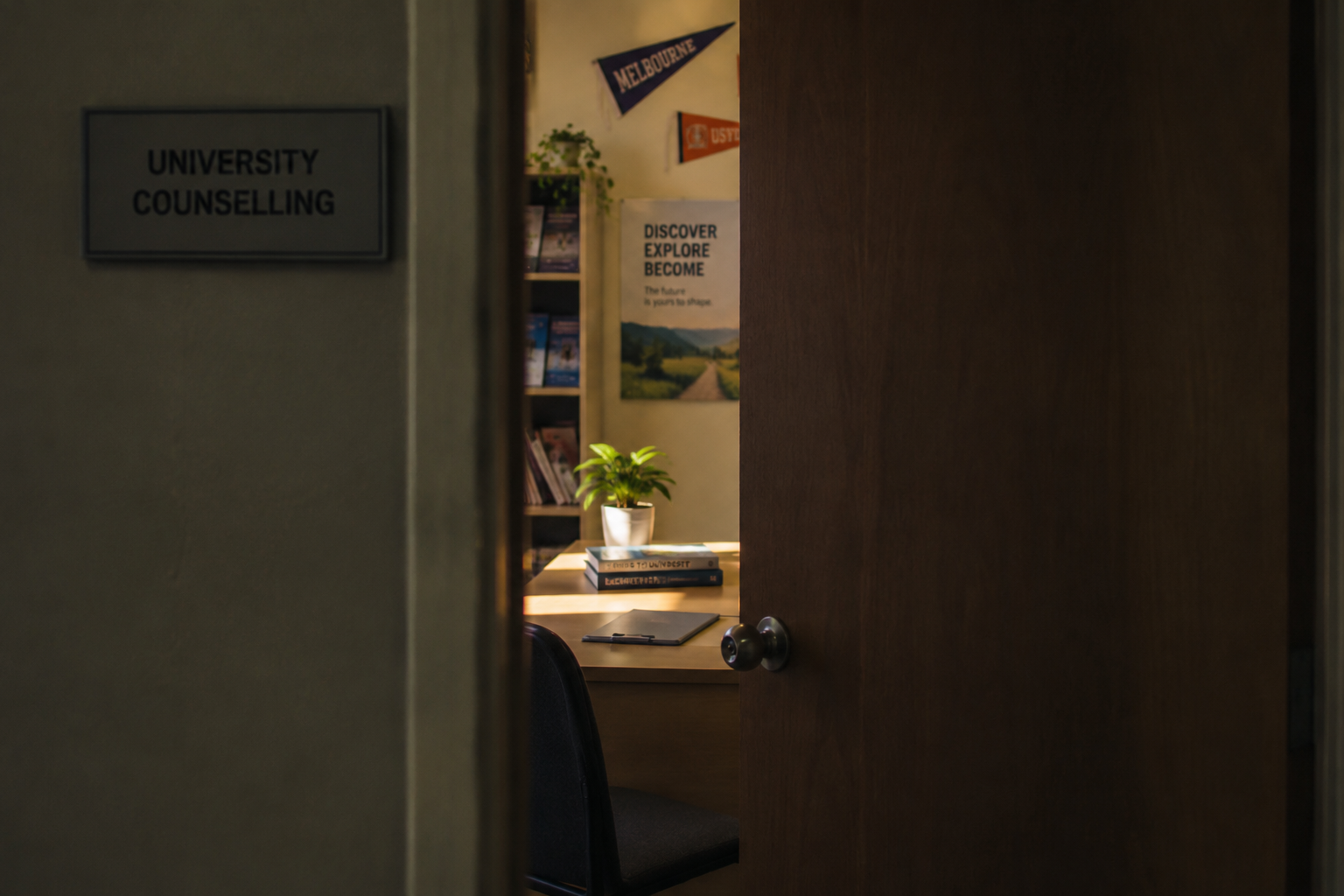
Somewhere, tucked behind a bigger office, wedged between two larger departments, there is a small room. Inside, prospectuses line the shelves, and university posters and flags have been dropped off by visiting representatives to make themselves known. On Open Day, this office is shown to prospective parents and students — briefly — as another service the school offers. An administration of university applications when the students are in Grade 12.
What they don’t see is what that room has held.
What Happens Behind That Door
No one sees that the office has witnessed a mother and her son sit on opposite sides of a table, neither looking at each other, both holding firm to entirely different ideas about what his future should be. It has held a student who arrived composed and left in tears — not from bad news, but because someone had finally asked her what she actually wanted. It has been the room where students arrive with one face and leave with another — having said things they have never said anywhere else. Where a young boy is told that his learning differences are not his identity — that his grades, while they matter, do not define him — and that his future is not defined by either.
These are not small moments. They are, in many cases, the moments that shape what a student does for the rest of their life.
And yet, the department that holds them is often the most under-resourced, most overlooked, most structurally sidelined in the school.
What Most Schools Actually Build
Let’s be direct about what university counselling often becomes in practice. It exists because parents request it. Because accreditation frameworks require it. Because someone needs to handle the paperwork — the transcripts, the recommendation letters, the application portals — and someone needs to liaise between the school and the universities that come calling every year.
In many schools, the counsellor is not even full-time in the role. They teach two or three subjects. They squeeze appointments between classes. They are the first to have their budget questioned and the last to have their work recognized. By the time they have meaningful time to work with a student, that student is in Grade 12, already anxious, and already running out of time.
What gets built, in that model, is not a counselling department. It is a processing function. A compliance checkbox. A service that activates when the deadline is near and closes when the application is submitted.
It should not be this way.
The Department That Could Exist
A good counsellor works like a frontline field nurse — not the most visible person in the operation, but among the most important. They see things others don’t. They are there when it’s happening, not in the debrief afterward. They respond to what is actually in front of them and work to find a way through.
A well-built university counselling department does exactly this, but proactively. It gets involved in Grade 9 and Grade 10, before the pressure sets in. It works with students while they still have time to explore — to try things, to change their minds, to understand what they value before they are asked to commit to it in an application essay.
While teachers focus on what students learn, counsellors become their partners in understanding who they are becoming — working alongside the classroom to support each student toward their best outcome.
It teaches students to think about purpose before they think about prestige. It asks them what kind of person they want to be before it asks them where they want to go. It prepares them — not just logistically, but psychologically — for the reality that life after high school will require more than academic results. It will require knowing who they are.
Every Student. Not Just the High Achievers.
A counselling department that is doing its real work does not reserve itself for the students already on track. It also sits with the student who cannot figure out why learning feels harder for her than for everyone else.
It builds the understanding that a learning difference is not a ceiling. That the path forward looks different for different people, and that different is not the same as lesser. Done well, this kind of counselling creates a culture within the school — one where students understand that they are not in competition with each other’s futures, but in the process of building their own.
This is what inclusion actually looks like in practice. Not a policy. A relationship. A consistent presence across three or four years of a student’s most formative period.
What Leaves the School With the Student
Here is what a well-supported counselling department produces that no trophy cabinet can show: students who leave knowing why they’re going. Who arrive at university not just placed, but prepared. Who have already asked the harder questions — about contribution, about community, about what they want to build — and have some language for the answers.
These students come back. They refer others. They tell their parents about the person at school who changed how they thought about their future — and how they were cared for. They become the kind of alumni a school is quietly proud of — not because of where they went, but because of how they carry themselves when they get there.
The reach of this work does not end at graduation. It runs forward — through careers, through communities, through the ways a person shows up in the world long after they last sat in that small room.
A Case for School Leaders
Open Days will keep happening. The labs and the sports facilities and the university recruitment visits are real achievements and they deserve to be celebrated. But for the school leaders and educators reading this: consider what you have built in that small room at the edge of the compound.
The investment required is not large. The department does not need to be big. What it needs is to be treated as essential rather than supplementary — given time, given support, and given the mandate to start its work early, when it can still make the most difference.
The visitors walked past. But the students know. And in ten years, when they are building something of their own, they will remember the room where someone first asked them what they wanted — and meant it.